

Ray Wang, Research Director at Futurum, shares his insights on how Micron’s 2600 SSD combines Adaptive Write Technology and G9 QLC NAND to close the performance gap between QLC and TLC SSDs for OEM client devices.
Cite this
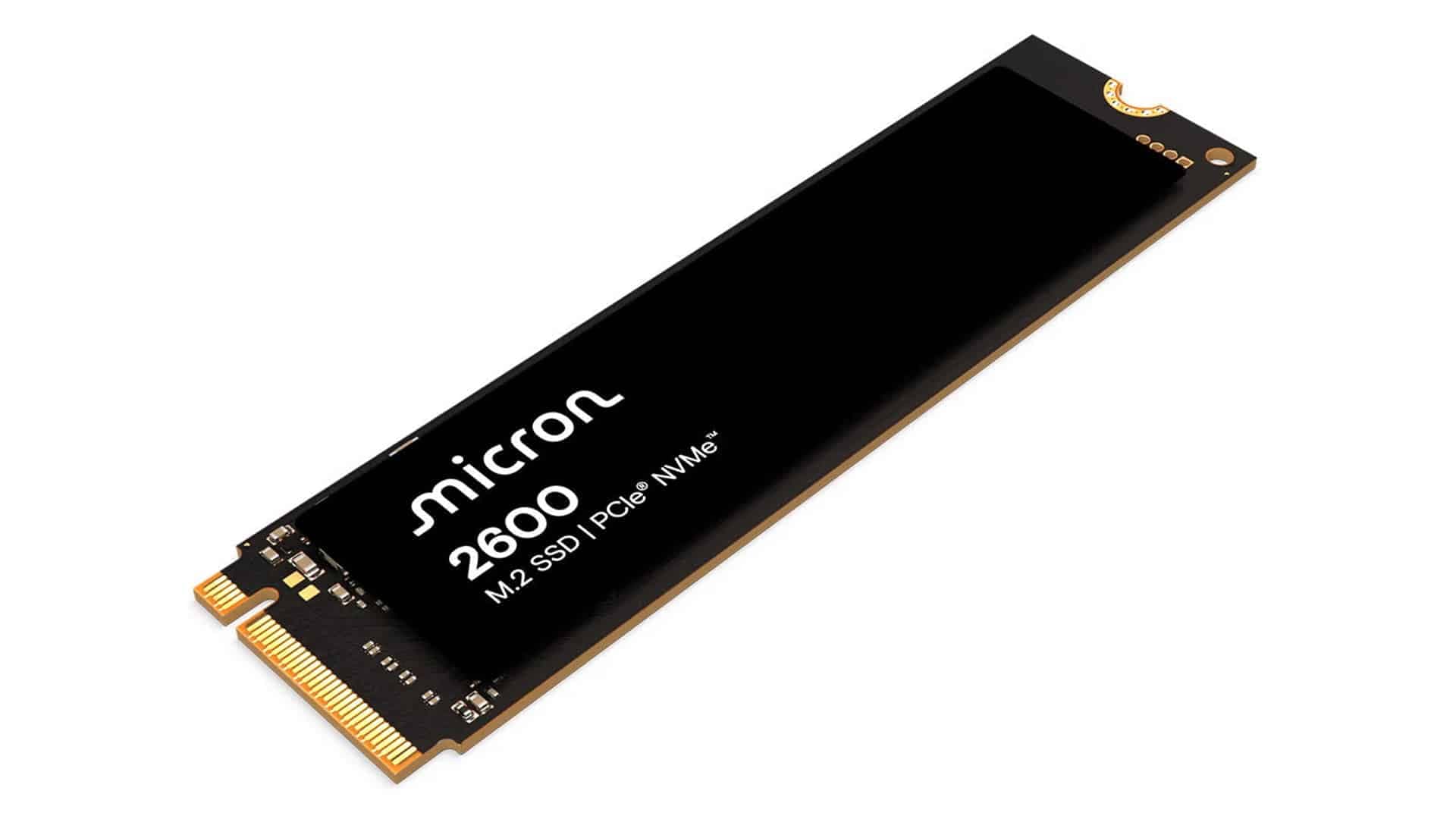
Analyst(s): Ray Wang
Publication Date: July 14, 2025
Micron’s 2600 SSD introduces Adaptive Write Technology and G9 QLC NAND to boost performance in value SSDs, offering OEMs a high-capacity, cost-effective offering that rivals TLC in key benchmarks.
What is Covered in this Article:
- Micron introduces the 2600 NVMe SSD with 9th-generation QLC NAND and Adaptive Write Technology
- The SSD achieves up to 63% faster sequential writes vs. value TLC and QLC competitors
- AWT enables dynamic switching between SLC, TLC, and QLC modes to optimise performance
- G9 NAND architecture delivers a 3.6 GB/s I/O rate and a 28% smaller footprint
- Designed for OEMs, the SSD ships globally in compact form factors up to 2TB
The News: Micron has rolled out its 2600 NVMe SSD, a budget-friendly storage option geared toward OEMs. It uses Micron’s 9th-gen QLC NAND and Adaptive Write Technology (AWT) to deliver PCIe Gen4 speeds while keeping QLC pricing in check.
Compared to other value QLC and TLC drives, it offers up to 63% faster sequential writes and 49% better random write performance. Available in multiple small form factors and sizes from 512GB to 2TB, the 2600 is built for performance-focused tasks in mainstream laptops and portable devices.
Can Micron’s New 2600 SSD Exceed QLC SSD Expectations?
Analyst Take: Micron’s 2600 SSD marks a solid step forward in client storage, blending the high-capacity benefits of QLC NAND with speed levels that rival TLC drives. At the center of this boost is AWT, which routes data to faster SLC or TLC areas before shifting it to QLC. That helps the drive keep up strong speeds even during heavy loads like big file transfers or app launches. With its 9th-gen QLC at the core, Micron’s aiming to push QLC into more demanding OEM uses, offering a mix of speed and savings that could be a big draw for cost-conscious OEMs who still want great user performance.
Multi-Tier Write Mode Improves Real-World Performance
Micron’s AWT lets the SSD switch between SLC, TLC, or QLC writing depending on what’s being done. This setup helps the drive hit sequential write speeds up to four times faster than standard QLC drives, across 40% of its total capacity. In testing, the 2600 delivered up to 63% faster sequential writes and 49% better random writes versus top budget TLC and QLC options. That means quicker installs, smoother content creation, and faster gaming loads. This smart caching design helps the 2600 offer TLC-like speed while keeping the cost savings of QLC.
G9 NAND Architecture Powers Performance Gains
The 2600 is the first to use Micron’s 9th-gen QLC NAND, built with a six-plane layout that increases parallel processing. It can run several read/write tasks simultaneously, up to 3.6 GB/s in NAND I/O speeds. The G9 NAND is 28% smaller than others in its class, just 11.5mm x 13.5mm, making it ideal for thin laptops, workstations, and handheld gear. This compact, robust design is why the 2600 performs well in space-limited devices.
Benchmarked Results Highlight OEM Readiness
Micron’s 2600 SSD held up well in the PCMark 10 Full System Drive Benchmark, which mimics real-world tasks in apps like Adobe, Microsoft Office, and games. It scored up to 44% better and had 43% more bandwidth than similar budget TLC drives. That kind of performance means faster startups, snappier app launches, and smoother overall use, which are key for IT teams dealing with large OS loads or imaging projects. The results show that the 2600 is ready for OEMs and is focused on giving users a strong experience without extra cost.
Ecosystem Support Underscores Strategic Fit
The 2600 SSD is getting solid backing from industry leaders. AMD highlighted its efficiency for daily use, and Intel included it in its Platform Component List. IBM plans to use the G9 NAND in its products, and Pure Storage sees it as a good fit for enterprise and large-scale deployments. Phison also noted its E29T controller helps the drive hit those high flash speeds. All this support shows how well the 2600 fits into today’s computing and storage ecosystem.
What to Watch:
- Uptake of the 2600 SSD among OEMs seeking to balance cost with performance in client PCs
- Feedback from real-world deployments using AWT in workloads like AI, video editing, and gaming
- Adoption of G9 NAND across additional Micron products or partner offerings in different markets
- Potential competitive responses from other NAND and SSD vendors targeting similar segments
See the complete press release on Micron’s launch of the 2600 NVMe SSD on the Micron website.
Disclosure: Futurum is a research and advisory firm that engages or has engaged in research, analysis, and advisory services with many technology companies, including those mentioned in this article. The author does not hold any equity positions with any company mentioned in this article.
Analysis and opinions expressed herein are specific to the analyst individually and data and other information that might have been provided for validation, not those of Futurum as a whole.
Other insights from Futurum:
Micron Technology Q3 FY 2025 Earnings Show Strong Data Center and HBM Growth
Marvell Expands AI Portfolio With 2nm Custom SRAM Launch
Marvell Advances Chip-Level Power Integration for AI and Cloud Efficiency
Image Credit: Micron Technologies
Subscribe to The Weekly
The week's market signals, one email, no filler. Unsubscribe any time.