
Is NVIDIA’s GB300 NVL72 Power Shelf the Answer to AI’s Grid Strain?

Ray Wang, Research Director at Futurum, shares his insights on how NVIDIA’s GB300 NVL72 reduces grid disruption from AI workloads using energy storage, ramp-rate control, and GPU burn to cut peak demand by up to 30%.
Cite this
Analyst(s): Ray Wang
Publication Date: July 31, 2025
NVIDIA’s GB300 NVL72 platform integrates energy storage and power smoothing technologies to reduce grid disruption from synchronized AI workloads and lower peak demand by up to 30%.
What is Covered in this Article:
- NVIDIA introduces power smoothing and energy storage features in GB300 NVL72
- Capacitor-based energy storage reduces peak power demand by 30%
- GPU burn and power cap strategies improve load ramp-up and ramp-down control
- The GB300 system enables more intelligent data center provisioning and denser racks
The News: NVIDIA has rolled out a power smoothing system for its GB300 NVL72 platform to tackle the sharp, synchronized power swings caused by massive AI training jobs. These sudden changes – driven by thousands of GPUs working in sync – strain the power grid and make things harder for data center operations.
To deal with this, NVIDIA has introduced a few key features: startup power caps, capacitor-based energy storage to balance loads, and GPU burn techniques to ease power usage at shutdown. Together, these updates can cut peak power draw by up to 30%, make power loads easier to predict, and help pack more hardware into the same space. The same upgrades will also roll out to GB200 NVL72 systems.
Is NVIDIA’s GB300 NVL72 Power Shelf the Answer to AI’s Grid Strain?
Analyst Take: The NVIDIA GB300 NVL72 platform directly addresses a significant challenge in AI-scale computing: managing extreme and unpredictable power consumption. Unlike older workloads that spread out power needs over time, AI training runs tend to create massive spikes and drops. NVIDIA’s approach mixes hardware and software to smooth things out. The strategic implementation of capacitors, measured ramp-ups, and regulated GPU wind-downs optimizes data center operations for enhanced grid compatibility. These changes make power use more efficient and give data centers more flexibility to fit more racks into the same power budget or reduce the total power they need to run their systems.
Addressing Synchronized Load Volatility
AI training tasks use thousands of GPUs simultaneously, which creates sharp swings in power, something traditional data centers were not built to handle. NVIDIA’s heatmaps show how these jobs cause clusters to jump between full throttle and idle, which puts extra stress on the power grid. This synced behavior can trigger voltage drops or leftover energy during sudden shutdowns. The NVIDIA GB300 is designed to address power grid challenges by incorporating energy storage and enabling smoother ramping, thereby transforming irregular power curves into a more manageable form for the grid.
Energy Storage Smooths Load Profile
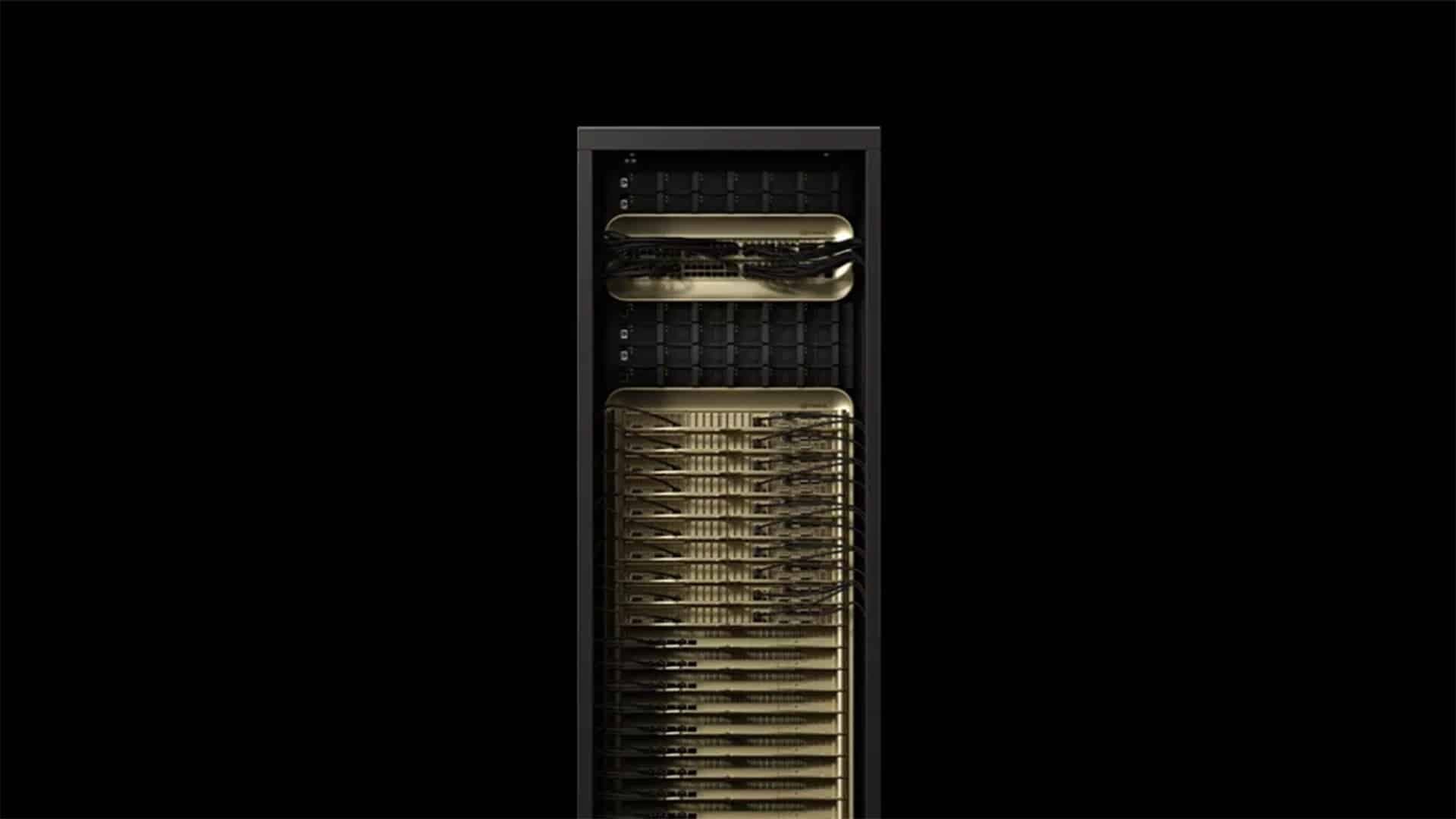
The GB300 NVL72 adds electrolytic capacitors inside its power shelves that store energy during low-demand periods and release it during spikes. Built with LITEON Technology, this power shelf design helps smooth power use right at the rack. These capacitors take up nearly half the space in the power supply and provide 65 joules of energy storage per GPU. This buffer helps reduce fluctuations in power draw, as demonstrated in tests comparing GB200 and GB300 units running the same workload. The GB300 cut peak grid usage by 30% while delivering similar power to GPUs.
Power Cap and Ramp-Down Strategies
Besides capacitors, the GB300 limits power spikes using a step-by-step startup system that gradually increases GPU power use. This startup cap is raised slowly to match what the grid can handle. At the end of a job, NVIDIA’s GPU burn feature keeps GPUs active a bit longer, letting power use drop off slowly instead of all at once. These behaviors are controlled with settings like minimum idle power and ramp-down timing, which can be tweaked using NVIDIA SMI or Redfish. This complete control over power use reduces pressure on the grid and makes job scheduling more predictable.
Implications for Data Center Design
With this smarter PSU setup, data centers no longer have to be built around peak power needs. Instead, they can be sized closer to average use, meaning more hardware in the same space or lower overall energy costs. In addition, since the power smoothing happens inside the rack – not fed back to the grid – operators have more control over their power use. This mix of hardware and software gives a scalable way to make data centers grid-friendly, whether using GB200 or GB300 NVL72 systems.
What to Watch:
- Adoption of similar power smoothing mechanisms by other GPU and data center vendors
- Broader industry validation of capacitor-backed rack-level energy storage
- Role of energy smoothing in mitigating grid instability from synchronized AI loads
- Data center layout and provisioning changes based on revised power assumptions
- Adjustments to power provisioning and rack density planning in modern data centers
See the full blog post on NVIDIA’s GB300 NVL72 power smoothing features on the NVIDIA website.
Disclosure: Futurum is a research and advisory firm that engages or has engaged in research, analysis, and advisory services with many technology companies, including those mentioned in this article. The author does not hold any equity positions with any company mentioned in this article.
Analysis and opinions expressed herein are specific to the analyst individually and data and other information that might have been provided for validation, not those of Futurum as a whole.
Other insights from Futurum:
Nvidia Q4 FY 2025: AI Momentum Strengthens Despite Margin Pressures
Is NVIDIA Building the Defining Infrastructure for AI-Powered Robotics?
Is GM’s AI Bet With NVIDIA a Turning Point for Its Vehicle and Factory Roadmap?
Image Credit: NVIDIA
Subscribe to The Weekly
The week's market signals, one email, no filler. Unsubscribe any time.