
Solving the Agentic Context Dilemma: Inside Neo4j’s Strategy to Build an Operational World Model

Brad Shimmin, Practice Lead at Futurum, shares insights on how Neo4j is repositioning graph architecture into an enterprise context engine to resolve data bottlenecks and govern autonomous AI agents.
Futurum's Brad Shimmin,
Cite this
Brad Shimmin, The Futurum Group, "Solving the Agentic Context Dilemma: Inside Neo4j’s Strategy to Build an Operational World Model," October 6, 2026. https://trial.futurumgroup.com/press-release/solving-the-agentic-context-dilemma-inside-neo4js-strategy-to-build-an-operational-world-model/

Analyst(s): Brad Shimmin
Publication Date: October 6, 2026
At GraphSummit New York, Neo4j repositioned its core graph database infrastructure as an enterprise context engine engineered to resolve the operational bottlenecks that are choking autonomous AI agents. To this end, the company is pairing a six-layer ontology architecture with zero-copy virtual graphs and native transactional block storage. The resulting platform establishes a structured knowledge layer that grounds probabilistic models in deterministic enterprise facts. Long-term enterprise success, however, will require executing through pragmatic, use-case-driven deployments that overcome historical data management inertia and innovation fatigue, all while enforcing strict write-back governance.
Key Points:
- Autonomous AI agents represent a new, independent data consumer class that requires contextual, interconnected data models rather than flat relational schemas.
- Neo4j’s Context Engine bridges business meaning, multi-hop graph reach, and agentic memory through a six-layer ontology architecture paired with hybrid zero-copy and native storage.
- To overcome historical enterprise master data management skepticism, organizations should adopt an incremental lagom deployment strategy that lets bounded, high-value workflows pull data models into place.
Overview:
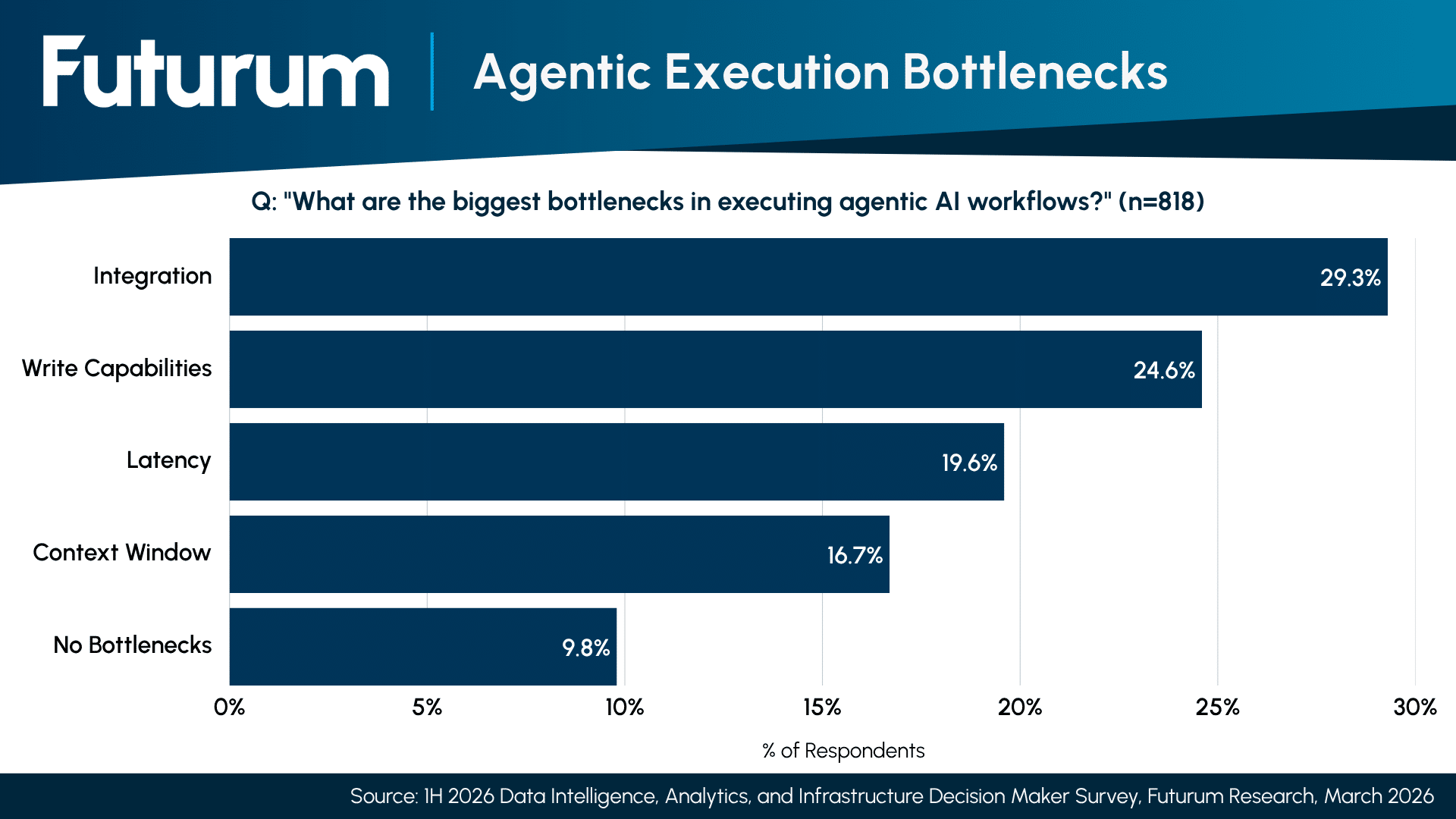
Enterprise artificial intelligence has hit an operational bottleneck centered on context delivery rather than algorithmic reasoning. While foundation models offer cognitive reasoning out of the box, corporate data estates remain fractured across hundreds of disconnected relational tables, columnar warehouses, and operational applications. Feeding these unintegrated silos into probabilistic models produces hallucinations, broken reasoning chains, and operational blind spots.
At GraphSummit New York, Neo4j framed this architectural hurdle around an underlying shift in enterprise data consumption. For decades, database systems served two primary workloads: deterministic software applications executing transactional routines and human analysts querying data to build historical reports. Autonomous AI agents represent an independent third class of data consumers. Agents dynamically explore data estates, formulate multi-step execution plans, call external tools, and alter operational records. Scaling this layer introduces a significant operational challenge: coordinating autonomous agents across unintegrated enterprise repositories.
To govern these interactions, Neo4j is repositioning its platform from an operational graph database into an enterprise context engine. The architecture rests on three pillars: Meaning (formal domain ontologies), Reach (deep multi-hop graph traversals exceeding single-step vector retrieval), and Learning (agentic memory loops that distill execution traces into reusable procedural skills).
Figure 1: Agentic Execution Bottlenecks
To bridge business intent with physical storage, Neo4j organizes the Context Engine into a six-layer ontology stack:
- Level 1 – Business Processes
- Level 2 – Domain Semantics
- Level 3 – Data Products
- Level 4 – Physical Technical Metadata
- Level 5 – Model Context Protocol (MCP) Tools
- Level 6 – Runtime Traces/Memory
The platform resolves corporate zero-copy mandates through Virtual Graphs, pushing Cypher queries down into SQL across Snowflake, Databricks, and BigQuery without moving raw data. However, because columnar warehouses encounter severe latency during recursive multi-hop joins, Neo4j pairs virtual graphs with native block storage (sub-250ms pointer-hopping) via Composite Databases.
Finally, to overcome buyer skepticism rooted in past Master Data Management (MDM) failures, Neo4j advocates for a lagom (“just right”) deployment strategy. Rather than attempting to model the entire enterprise upfront, organizations must let bounded, high-value business workflows pull necessary ontologies and pipelines into place incrementally.
Conclusion
Context engines represent a necessary evolution in enterprise AI infrastructure, shifting the focus from passive knowledge retrieval to governed autonomous action. As enterprises adopt open standards such as the MCP to operationalize agent memory, platforms must enforce strict write-back guardrails, continuous conflict detection, and dynamic access controls to protect core systems of record. Neo4j’s native graph performance, hybrid storage options, and pragmatic semantic framing position the company favorably against single-ecosystem warehouse catalogs, provided it continues streamlining developer usability and deployment overhead.
The full report is available to read on our website and via subscription to Futurum Intelligence’s Data Intelligence, Analytics, & Infrastructure IQ service—click here for inquiry and access.
See the complete press release on new ways to scale and apply enterprise AI with Neo4j on the Neo4j website.
Futurum clients can read more in the Futurum Intelligence Platform, and non-clients can learn more here: Data Intelligence, Analytics, & Infrastructure Practice.
About the Futurum Data Intelligence, Analytics, & Infrastructure Practice
The Futurum Data Intelligence, Analytics, & Infrastructure Practice provides actionable, objective insights for market leaders and their teams so they can respond to emerging opportunities and innovate. Public access to our coverage can be seen here. Follow news and updates from the Futurum Practice on LinkedIn and X. Visit the Futurum Newsroom for more information and insights.
Published by Futurum.
More from Brad Shimmin
Beyond Retrieval: CData Connect AI Gateway Tackles Transactional Agents
Brad Shimmin, Practice Lead at Futurum, assesses the launch of CData Connect AI Gateway and how its managed MCP architecture overcomes the enterprise agentic read-write divide.
The Context Bottleneck: Where AI Buyers Struggle, the Market Accelerates
Labeling is the only AI data challenge still rising, up to 40.5%, while the Semantic & Context Layer leads every year of Futurum’s DIAI forecast, peaking at 29.0%. Buyers and the forecast point to the same gap.
Teradata Bridges the Enterprise AI Agent Execution Gap
Brad Shimmin examines Teradata’s launch of Tera, an agentic coworker architecture leveraging the Tera Context Engine and Tera Harness to ground autonomous execution in enterprise semantics.