
IBM Announces New Quantum Processor and IBM Quantum System Two

Keith Kirkpatrick, Research Director at The Futurum Group, covers IBM’s quantum computing announcements, including the Heron quantum processor, IBM System Two, the release of Qiskit 1.0 and Qiskit Patterns, and a 10-year quantum roadmap.
Cite this
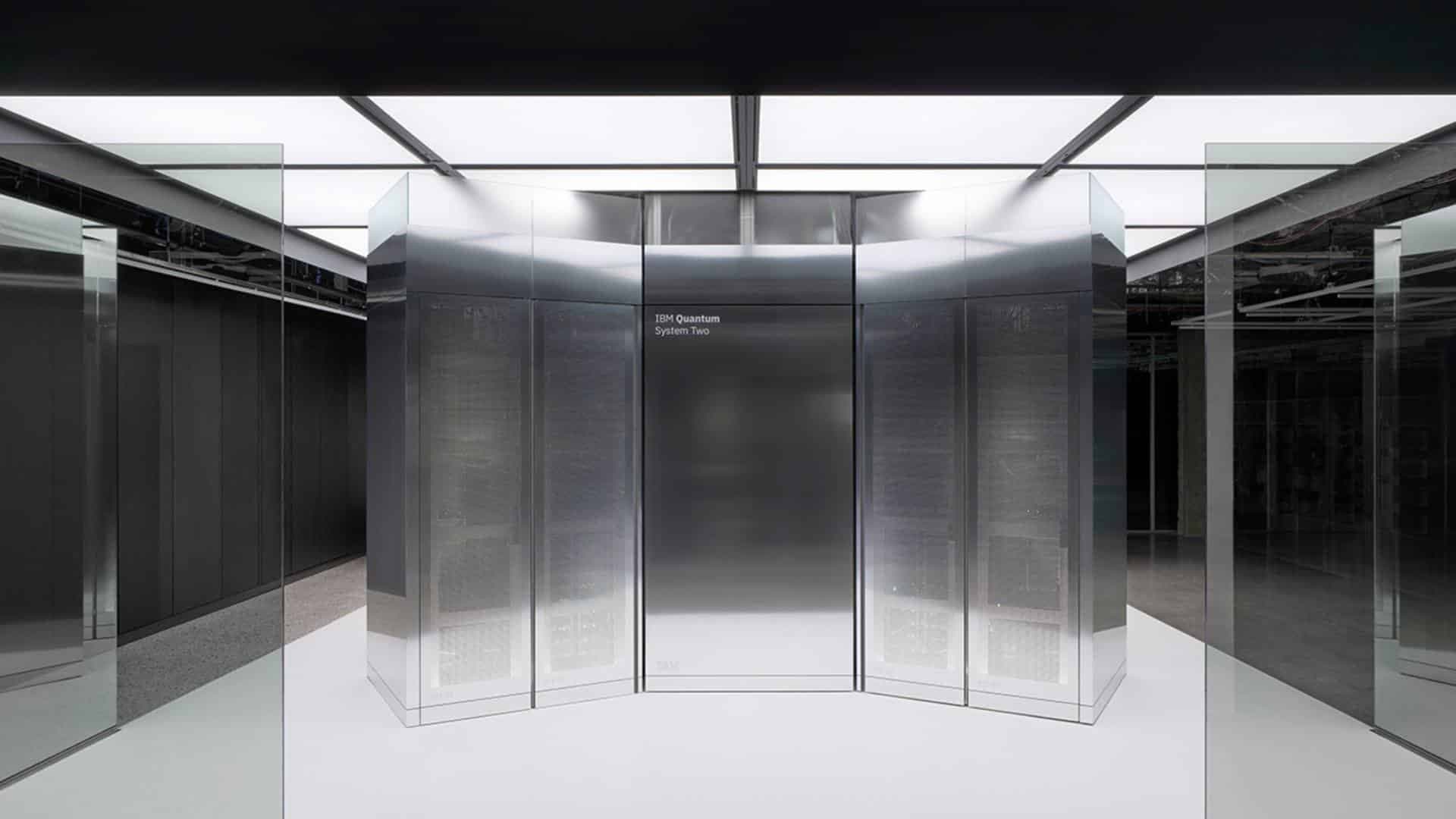
The News: IBM made several announcements at its Quantum Summit this week, including the release of the IBM Quantum Heron processor, the release of IBM Quantum System Two architecture, new features in its Qiskit quantum programming software, and an extension of its publicly released quantum development roadmap. Considered together, the announcements are centered on IBM’s goal of advancing the era of quantum utility, which refers to quantum computers being able to solve problems at a scale beyond brute force classical simulation, prior to the development of fault-tolerant quantum computers. You can read a press release containing details of IBM’s quantum announcements at IBM’s website.
IBM Announces New Quantum Processor and IBM Quantum System Two
Analyst Take: IBM made several quantum computing-focused announcements this week at its Quantum Summit, including the debut of IBM Quantum Heron, the first in a new series of utility-scale quantum processors, the unveiling of IBM Quantum System Two, the company’s first modular quantum computer, new features within its Qiskit quantum programming software, and the release of an extended quantum development roadmap.
Each of the announcements, while achievements unto themselves, can be viewed as interconnected elements of a larger strategy of focusing on the development of an entire technology stack that can support the use of quantum computers to solve research problems within the next several years.
IBM Quantum Heron Processor Unveiled
The debut of the IBM Quantum Heron processor is noteworthy, largely because it is the first of IBM’s new class of processors that feature significantly improved error rates. IBM says that the 133-qubit Heron processor offers a five-times improvement over the previous best records set by IBM Eagle, the 127-qubit quantum processors previously developed by IBM.

IBM Heron will now be available in the cloud, with several leading research universities, government agencies, and quantum-focus commercial organizations having already run experiments on the new system to demonstrate that it is capable of serving as a scientific tool to explore utility-scale classes of problems in chemistry, physics, and materials beyond brute force classical simulation of quantum mechanics.
IBM Quantum System Two Becomes a Building Block for Quantum-Centric Supercomputing
IBM also unveiled IBM Quantum System Two, the company’s first modular quantum computer and cornerstone of IBM’s quantum-centric supercomputing architecture. The first IBM Quantum System Two, located in Yorktown Heights, New York, has begun operations with three IBM Heron processors and supporting control electronics.
IBM Quantum System Two combines scalable cryogenic infrastructure and classical runtime servers with modular qubit control electronics and is designed to serve as a building block for IBM’s vision of quantum-centric supercomputing. This architecture brings together quantum communication and computation, assisted by classical computing resources, and leverages a middleware layer to integrate the quantum and classical workflows.
This announcement reflects the reality that in the near term, quantum computers are going to be used in conjunction with classical computing resources to solve problems, and having a stable architecture that can integrate these workflows is key to enabling utility-scale quantum computing. IBM plans for this system to house IBM’s future generations of quantum processors, which IBM says will gradually improve the quality of operations the company can run, thereby significantly extending the complexity and size of workloads IBM will be capable of handling.
IBM Releases an Extended 10-Year Quantum Computing Roadmap
IBM also released an extended, 10-year IBM Quantum Development Roadmap, which clearly lays out a development roadmap with both development and innovation targets through 2033. Development targets are defined as when technologies are actually in the hands of users, versus innovation targets, which describe internal milestones for proofs of concept or research and development milestones.

The interesting element of this roadmap is the focus not on the number of qubits future systems will have but on the improvements to quantum circuit quality that will allow exponential growth in the number of gates. As the number of gates increases, the ability of a quantum processor to handle a much greater range of potential applications does as well, thereby further increasing the potential utility of quantum computers.
Qiskit and Generative AI to Increase Ease of Quantum Software Programming
IBM made several other announcements that demonstrate its push to create a full stack of tools to enable utility-scale quantum computing over the next several years. The company announced the release of Qiskit 1.0, its open source quantum application development software, which is scheduled for February 2024.
IBM also announced Qiskit Patterns, a framework designed to map classical problems, optimize them to quantum circuits using Qiskit, execute those circuits using Qiskit Runtime, and then postprocess the results. A Qiskit Pattern is an intuitive, repeatable set of steps for implementing a quantum computing workflow, which combined with Quantum Serverless, enables users to build, deploy, and execute workflows integrating classical and quantum computation in different environments, such as cloud or on-premises scenarios. All of these tools are designed to serve as building blocks for users to build and run quantum algorithms more easily.
IBM Staking a Claim to the Quantum Ecosystem
IBM’s announcements from its Quantum Summit seem to reflect the company’s desire to stake a claim to all parts of the quantum ecosystem, from the quantum processors and infrastructure, through cloud access to quantum resources, and across the software landscape, via the Qiskit application platform and related tools. While there is significant promise for quantum computing over the next several decades, IBM has realized that from a longer-term commercial perspective, the safe bet is to use its scale and might to participate in all facets of the ecosystem.
That said, as of today, quantum computers are still not ready for commercialization; IBM admits that the experiments and projects that are ongoing are largely research oriented. However, IBM is well positioned to benefit from the expected path of quantum, which will be marked by a stepwise progression of technical achievement over time, and given its breadth of activity and influence across the ecosystem, likely will be able to take advantage of unexpected quantum technology breakthroughs.
Disclosure: The Futurum Group is a research and advisory firm that engages or has engaged in research, analysis, and advisory services with many technology companies, including those mentioned in this article. The author does not hold any equity positions with any company mentioned in this article.
Analysis and opinions expressed herein are specific to the analyst individually and data and other information that might have been provided for validation, not those of The Futurum Group as a whole.
Other insights from The Futurum Group:
IBM Power: Continued Innovation with Refreshed Leadership
IBM watsonx.governance Tackles AI Risk Management
Salesforce Announces New Commerce Cloud Features
Image Credit: IBM
Subscribe to The Weekly
The week's market signals, one email, no filler. Unsubscribe any time.
More from Keith Kirkpatrick
Is Oracle Third-Party Support a the Lower-Risk Choice for Telcos?
Keith Kirkpatrick, VP, Research at Futurum, shares his insights on why a large European telco moved its business-critical Oracle estate to third-party support, and what it gained.
Genesys Forward-Deployed Engineering Aims to Speed Agentic CX
Keith Kirkpatrick, VP, Research at Futurum, shares his insights on Genesys forward-deployed engineering and whether embedded engineers can move agentic CX from pilot to production at scale.
Are Smartsheet Core Platform Fixes Its Real ENGAGE News?
Keith Kirkpatrick, VP, Research at Futurum, shares his insights on why Smartsheet’s core platform fixes at ENGAGE 2026, from a finished Table View to consumption pricing, matter more competitively than its AI news.